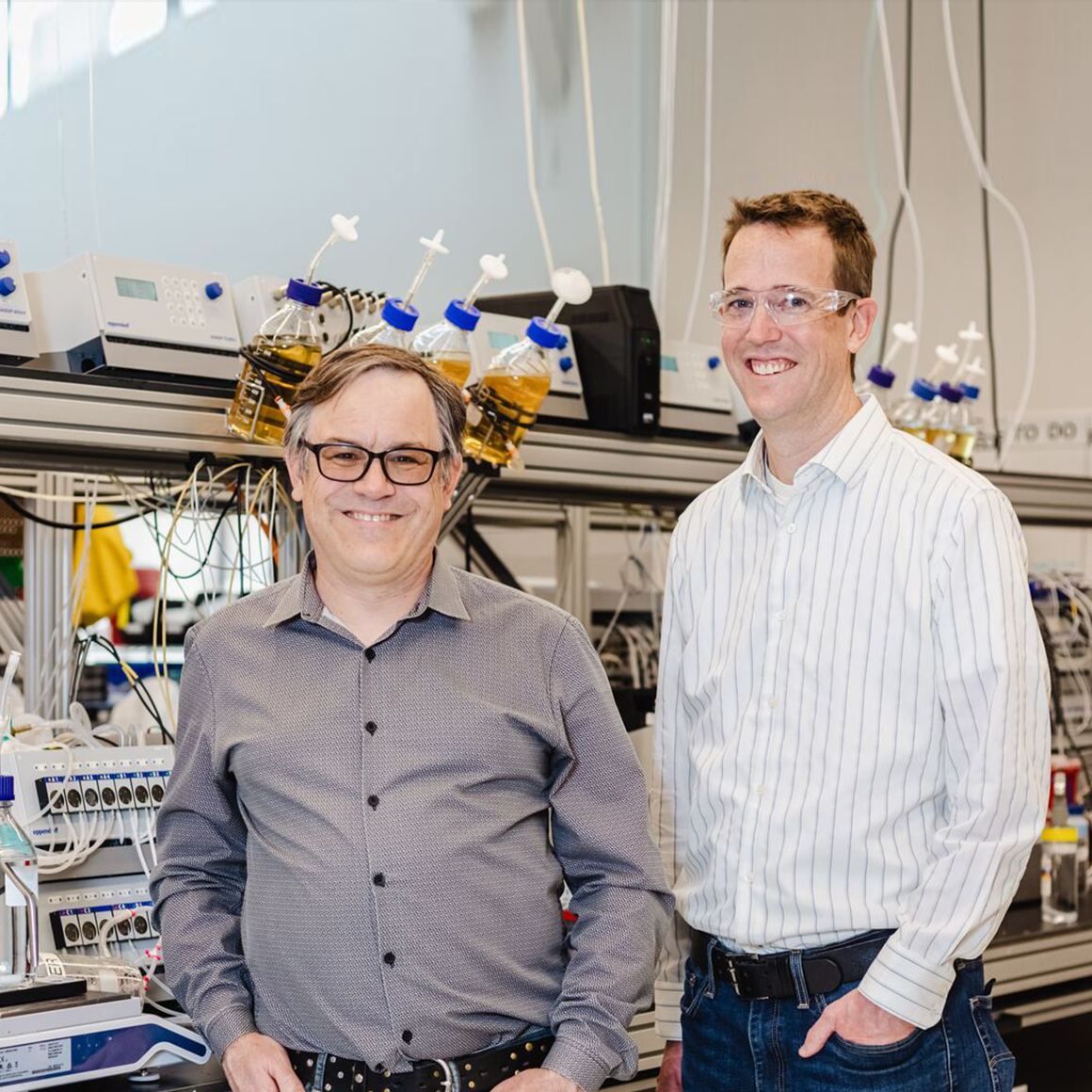
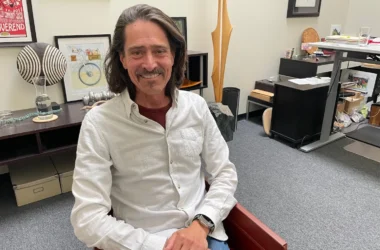
These green-certified businesses — Sun Light & Power, Arkin Tilt Architects and McCutcheon Construction — all have decades of experience with eco-friendly building.
BERKELEYSIDE – April 30, 2026
Green building in Berkeley has taken root, with businesses founded decades ago thriving today. Sun Light & Power has installed thousands of solar power systems in its half-century history. Arkin Tilt Architects has been designing — and building — low-carbon straw-bale structures since the 1990s. At McCutcheon Construction, founded in 1980, a healthy building includes a myriad of features, from low-emission heating and power systems to sustainable materials.
These three firms are also certified green businesses, having followed an all-encompassing checklist provided by the Alameda County Green Business Program to achieve statewide certification. They bring their ethos into their own offices with measures for energy efficiency, water reduction, sustainable product sourcing, and more.
Sun Light & Power
In 1976, recent oil shortages and long gas lines loomed over the national psyche. The environmental movement was gaining ground. And Gary Gerber, just out of UC Berkeley with an engineering degree, had a vision of starting a solar power company.
To Gerber, the sun was the “one source of power for the human race that made sense. It’s essentially infinite.”
Back then, a solar power company was a complete outlier.
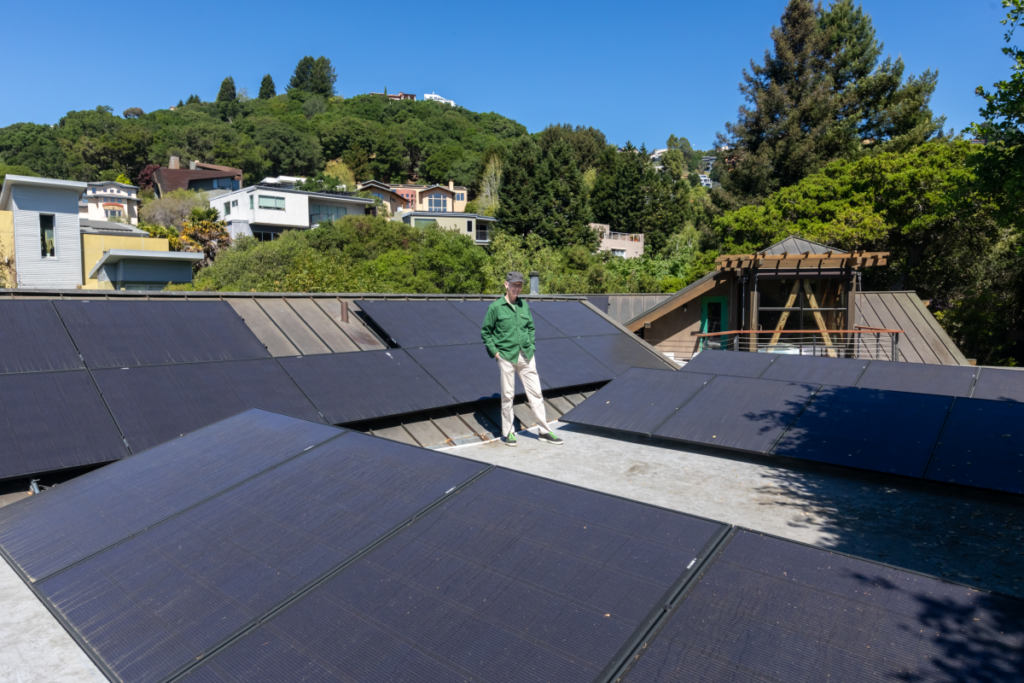
Now in its 50th year, the company Gerber founded, Sun Light & Power (SLP), has installed over 3,000 solar power systems throughout the Greater San Francisco Bay Area. That includes custom-designed photovoltaic (PV), many with battery storage and solar thermal hot water heating systems.
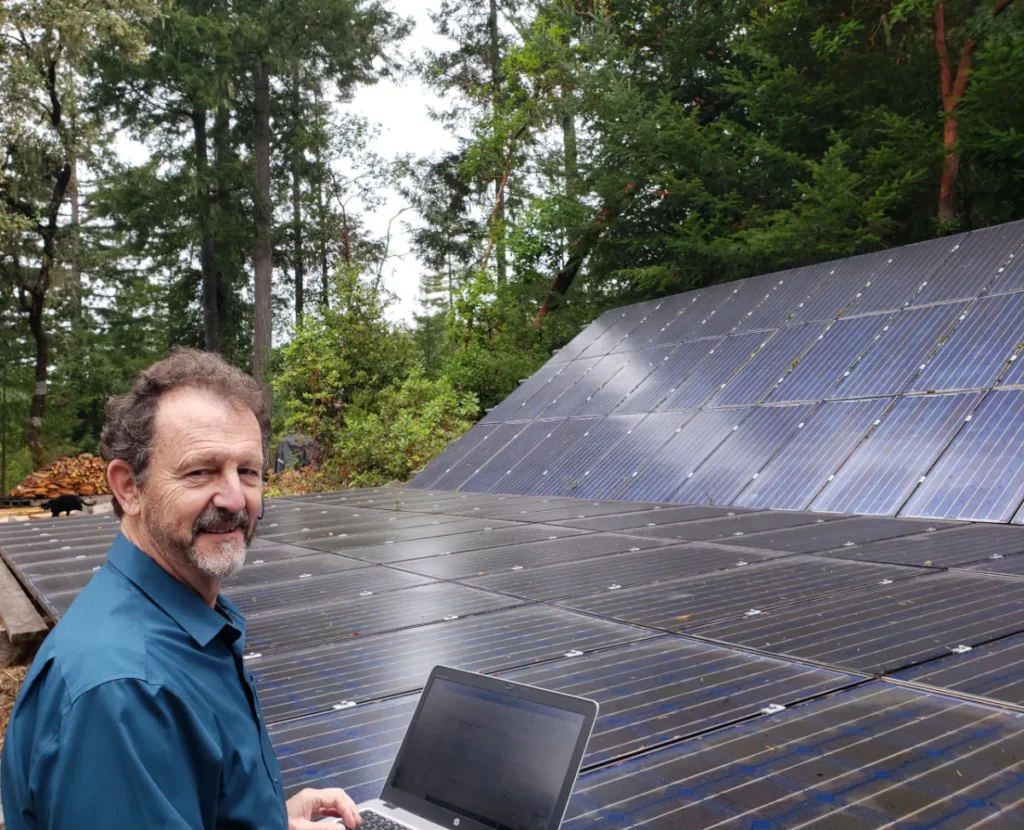
Since 2001, in Berkeley alone, the customer-forward business has served 337 homes and businesses, receiving hundreds of four- and five-star reviews online.
The ecological impact of Berkeley customers is impressive:
“In just their first year of operation, these PV and solar thermal systems generated about 6.5 GWh of energy and prevented the equivalent of 3,064 tons of carbon dioxide from entering the atmosphere,” says Seamas Brennan, IT specialist and marketing coordinator at SLP. (Based on the EPA Greenhouse Gas Equivalencies calculator for the Berkeley zip code 94710, he estimates these installations offset burning 3.6 million pounds of coal.)
That’s a lot of progress since the 1970s, when Gerber built his very first solar project from scratch, using a getup of redwood, copper plate and copper pipes, and installed it atop his parents’ house in Walnut Creek.
After five decades and thousands of projects, he retired at the end of 2025. The West Berkeley company then transitioned to a worker-owned model in 2018 and now has an executive council instead of a single CEO. SLP is a Certified Benefit Corporation, in addition to a Certified Green Business, which obligates them to consider the greater good beyond the bottom line.
“Solar is applying the most cost-effective energy in the world,” says Jesse Quay, a senior project developer. “Sun Light & Power was born out of an energy crisis. We’re now going through another war over oil.”
No matter the political winds, SLP stays focused on the goal to bring solar to as many households and businesses as possible. And the team loves a challenge. Devin Weaver, COO and Executive Council President, asserts that their motto could be “no system too complex.”
Weaver says, “We find creative solutions just as Gary did back in the day. We do stuff other people are unwilling to do. We want people to have solar on their roofs. We treat it like a cause.”
Arkin Tilt Architects
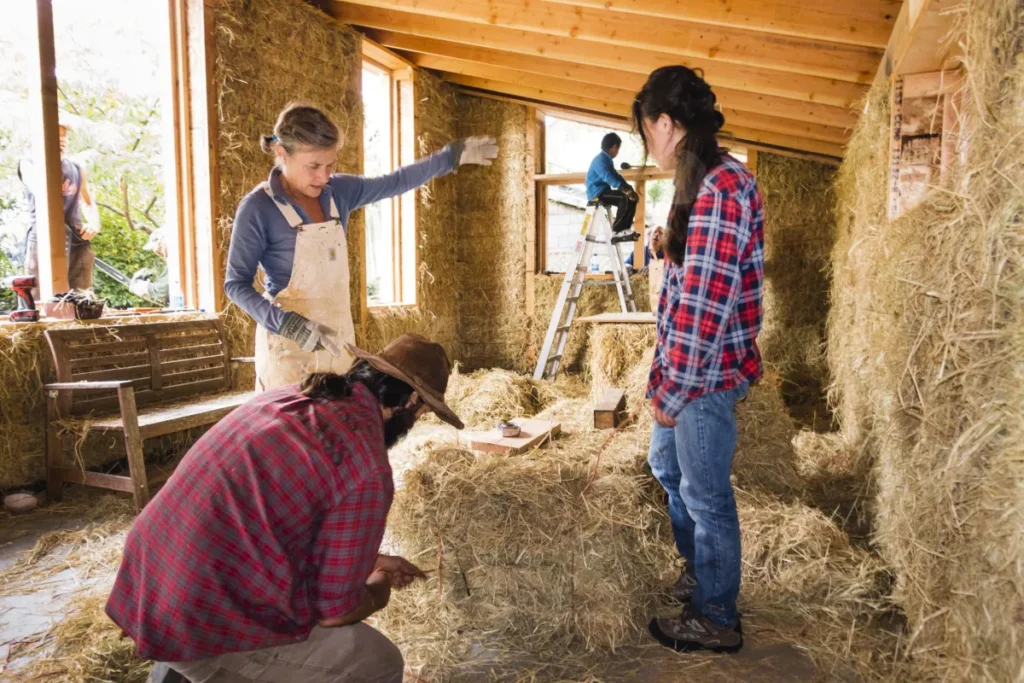
You’ve heard about a barn raising, but how about a straw bale raising? If you hire Arkin Tilt Architects, you may very well be called upon to roll up your sleeves and grab a bale or two.
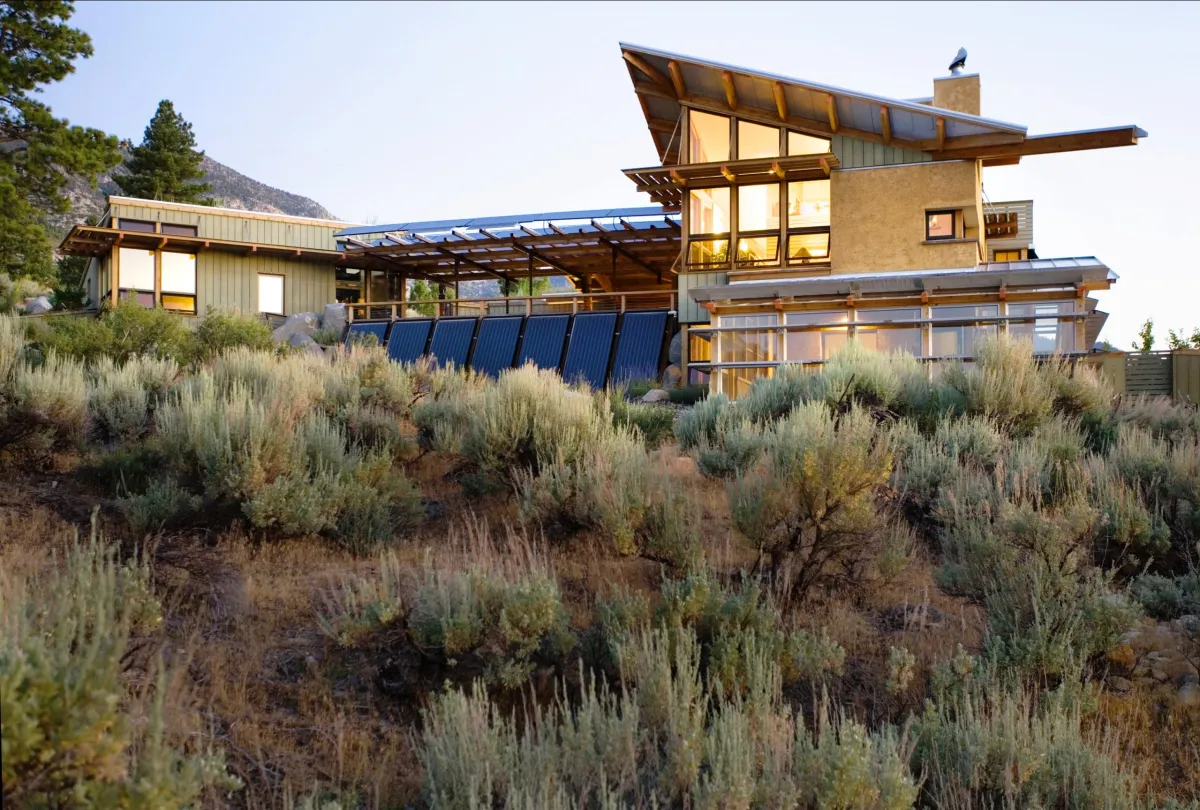
The firm’s married partners, David Arkin and Anni Tilt, have had straw bale in their design toolbox since the 1990s, with over 50 completed bale projects, including a nature center in the Sierras that just won an honor award from the AIA East Bay. Straw bales are a fire resistant, carbon-storing option for insulation.
A bale raising takes lots of hands to install. “It’s a ridiculous amount of fun,” says Arkin. Imagine stacking rows of “fuzzy bricks” as Arkin describes them, into the walls of a house, which are then covered in mesh and plaster. This makes for thick walls that hold warmth in winter and keep the interior cool in summer. In addition to being fun to assemble, it’s also a practical and sustainable practice.
“From the exterior it looks like a regular building,” he says.
In Arkin Tilt’s 28 years in business, green design has been the focus “all along.”
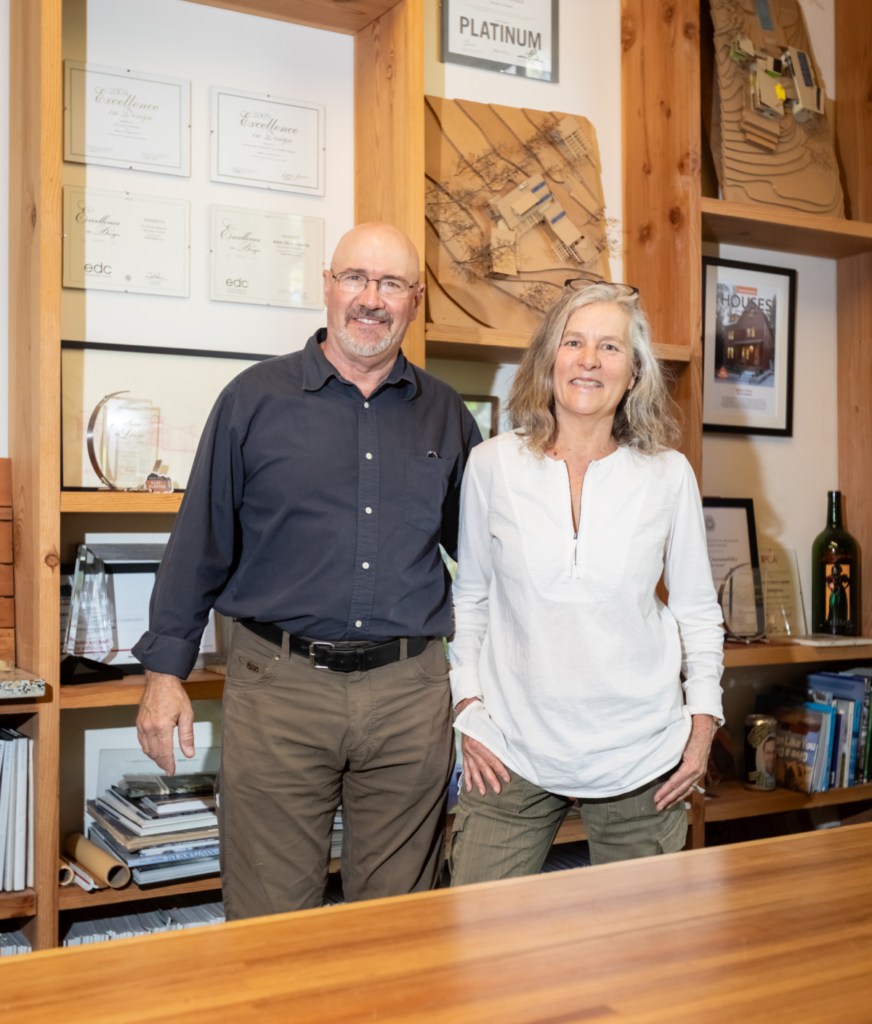
The duo, who both graduated from UC Berkeley’s College of Environmental Design, teamed up in Nov. 1997 to launch Arkin Tilt Architects “at a time when environmental consciousness was on the rise.” Arkin had worked with Sim Van der Ryn, a UC Berkeley professor often called “the father of green architecture”) and Tilt had worked with esteemed Berkeley architecture firm Fernau + Hartman.
Nearly three decades in, the pair leads an award-winning architecture firm that specializes in energy and resource efficient design and ecological planning. Says Tilt, “We work with what’s there. It’s always an important place to start.”
In fact, the combination of good design and green philosophy is what attracts their clients.
Their design philosophy extends to their office, which they share with their engineering partners, Verdant Structural Engineers.
The former Asian furniture showroom in the Gilman District is constantly being remodeled, incorporating their green ethos.
“All of our partitions are made from salvaged lumber,” Arkin said. The gleaming wood conference table was once a piece of a bowling alley. There are salvaged windows — repurposed from Urban Ore — in front of a roll-up garage door.
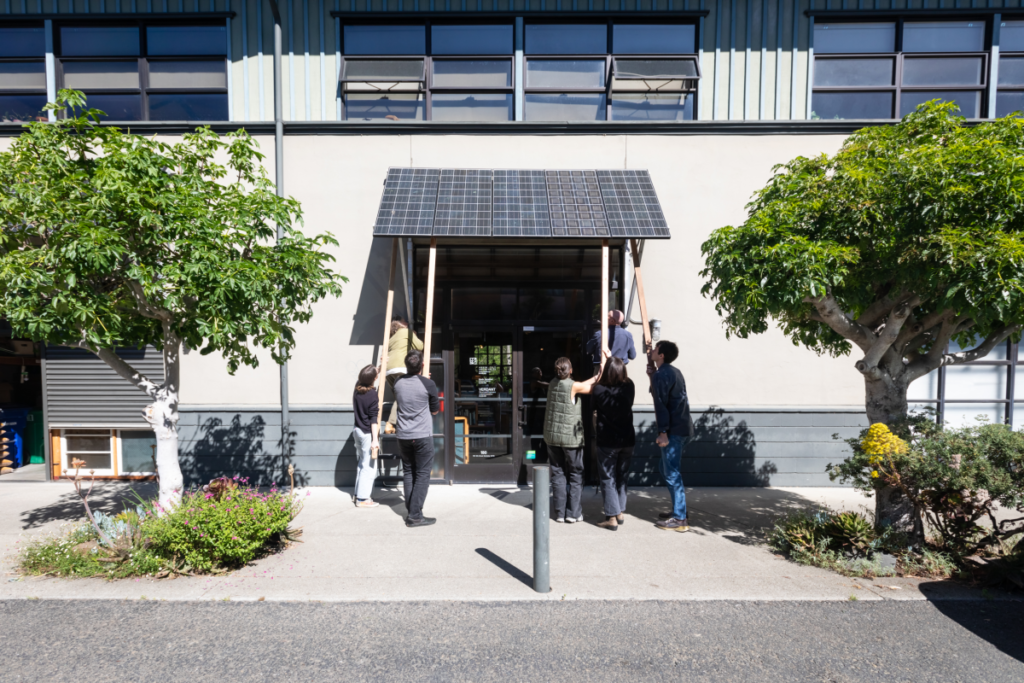
Even the outdoor awnings are PV panels for both shade and power. In order to optimize the sun’s rays, the awning angle is changed twice a year.
Beyond their office digs and innovative designs for residential and commercial customers, Arkin adds that he and Tilt want the next generation of architects to incorporate green practices.
The couple work to “spread the word by lecturing, hosting webinars, but also trying to create examples that are also beautiful buildings.”
McCutcheon Construction
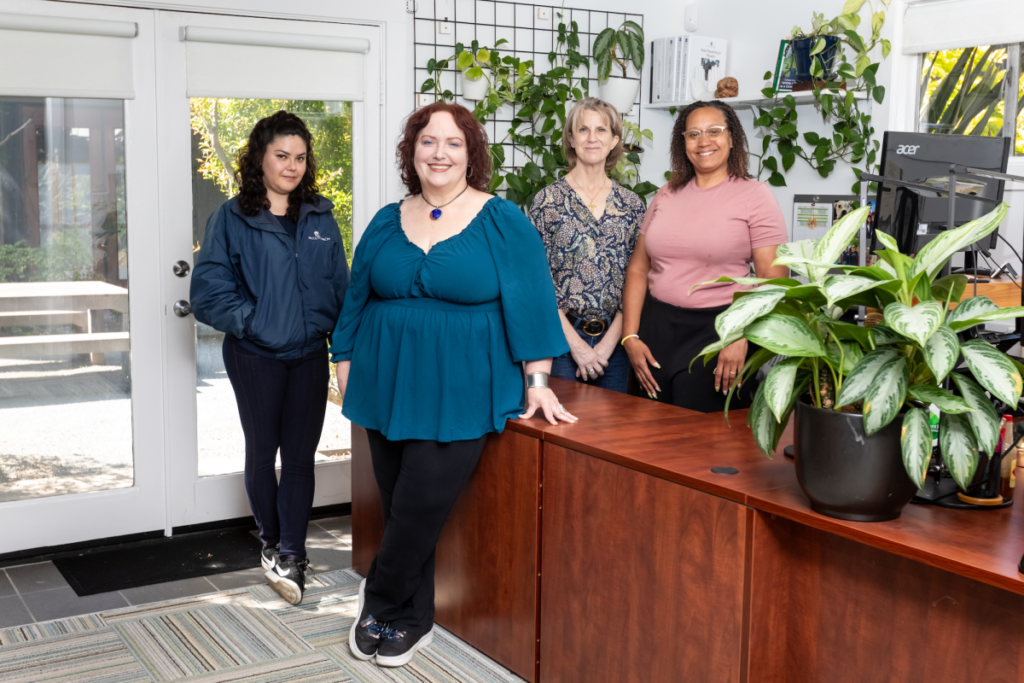
To understand the philosophy McCutcheon Construction Inc. espouses on building green, it helps to start with their Berkeley office. The standalone building of the green-certified business features lots of light, a garden, and even reverse osmosis filtered water.
“Being green means being healthy,” said President Cynthia Pohlman. “And being healthy might incorporate something that isn’t necessarily a product.” For the McCutcheon team, that meant creating a stress-free office environment, encouraging work-life balance.
And, yes, yoga. Twice a week, employees head out early to the neighboring Berkeley Wellness Center.
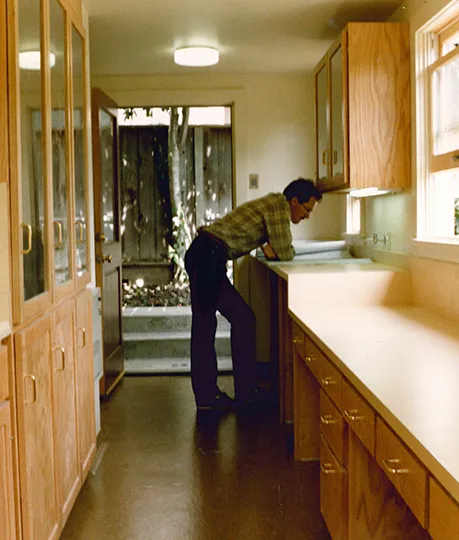
The company was founded in 1980 by Michael McCutcheon, a fourth-generation builder from Southern California. He graduated from UC Berkeley with a biology degree, but returned to the family trade by launching a design-build company (one that provides both architectural design and construction) that was gentle on the earth.
McCutcheon’s interest in transcendental meditation gave him an appreciation for traditions such as “Feng Shui,” the ancient Chinese art of harmoniously arranging buildings, objects and space.
In 2016, the founder sold his company to his employees. It now operates as a licensed GC, a worker-owned enterprise, structured under an ESOP (Employee Stock Ownership Plan).
Today, the Berkeley-based firm is led by five women, a rarity in a male-dominated industry, says Pohlman, who arrived at the company in 2013 and became president in 2022.
“We have to look at what’s important to the homeowner,” Pohlman said about the company’s approach. “A healthy home can mean different things, such as the building materials going into the home, and what effect it will have on the environment.”
“We partner with the homeowner and their design professionals, as to what systems they want in place,” such as heat pumps, ventilation systems, radiant heat. “Those have to be intrinsic to the design.”
Clients also look to McCutcheon in choosing eco-friendly products like solar panels and renewable products, such as reclaimed wood, carpet tiles, or Forest Stewardship Council (FSC) certified wood, which is sustainably harvested. Other considerations include recycled glass in countertops and avoiding household toxins by using non-VOC paint.

Another aspect to green building: how to deal with the demolition. Pohlman says, “You don’t just trash everything. Rather than throw out an old sink, if we can, we send it to a place like Omega Salvage, Urban Ore or Habitat for Humanity.”
During the renovation, air filtration systems are put in place if the clients are living in the home to keep the interior dust free. Abatement is also carefully addressed.
“Because we are living in an area with older homes, you could have lead paints, even asbestos tape around your duct work, and it all has to be treated properly,” Pohlman says.
Under Pohlman, the company has started offering a concierge-style service division called MCare, to maintain homes post-remodel, keeping the systems humming and the structure in pristine shape even a decade on.
“It allows their home to look just as fresh 10 years after we put it in.”
WHAT NEXT
- Consider choosing a green certified business in California or register to become a green business.
- Show your environmental commitment and connect with the community at the Berkeley Bay Festival (Sat., May 2, 11 a.m.–4 p.m.) or at the Acterra East Bay Green@Home Tour (Sat., June 6, 11 a.m.–3 p.m.).
- Visit the Discovered in Berkeley Stories page for more inspiration from local businesses.