Curiosities AI, a learning app, and Classroom Matters, a study skills center, both aim to support students.
BERKELEYSIDE – September 2, 2026
With students back in class, many parents are seeking new ways to help their kids thrive at school. Two innovative Berkeley businesses — one longstanding, the other new — help students learn to learn using vastly different techniques.
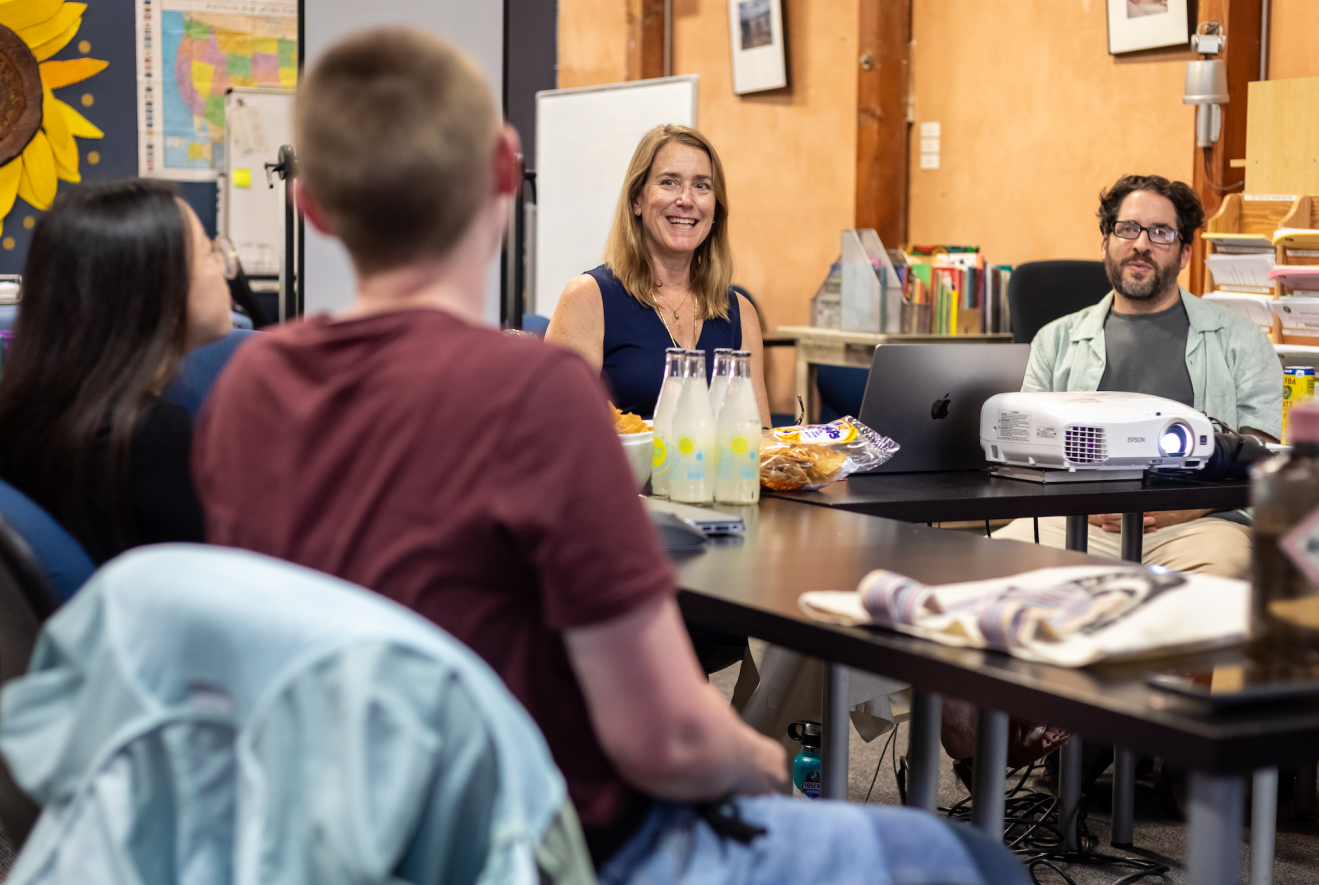
Classroom Matters is rooted in one-to-one tutoring focused on developing executive function support — the skills and strategies to better plan, organize and focus inside and outside the classroom. Curiosities AI uses artificial intelligence — and an octopus named Ace — to encourage young children to continue to ask questions and maintain curiosity even as they enter classrooms and learning becomes more regimented.
Classroom Matters
Before the business was called Classroom Matters, it was a cottage industry in former Berkeley High School teacher Molly Gales’ living room, helping high schoolers learn study skills and other “soft skills.” Lisa Miller, also a BHS teacher, joined her in 2000, and Classroom Matters was born.
The business soon outgrew the living room and moved to a retail space. In 2008, Molly changed careers and in 2010, Lisa met Tatiana Guerreiro Ramos, whose kids were in the same second-grade class. They became fast friends, then business partners a couple of years later.
Today, Classroom Matters is now in a larger space on Sacramento Street near Dwight Way. They work with about 500 to 600 people a year, helping students and adults develop executive functioning skills like learning how to plan, prioritize, manage time and manage calendars or pack their backpacks.
They also guide parents of neurodivergent children through the often-confusing world of special education, including 504 plans and IEPs. They offer online workshops for parents and caregivers on ADHD. The business helps older students prepare for AP and SAT exams, and offers high-impact strategies for studying. They also coach families to understand and navigate differences in learning profiles.
In recent years, Classroom Matters has started working more with college students, especially those the pandemic deprived of opportunities to learn communication and social skills, Lisa said. Others seek help dealing with ADHD.
The business has also worked with some adults, “helping them navigate life and, in some cases, helping them figure out what comes next,” Tatiana said.
“We work with humans across the lifespan,” she said.
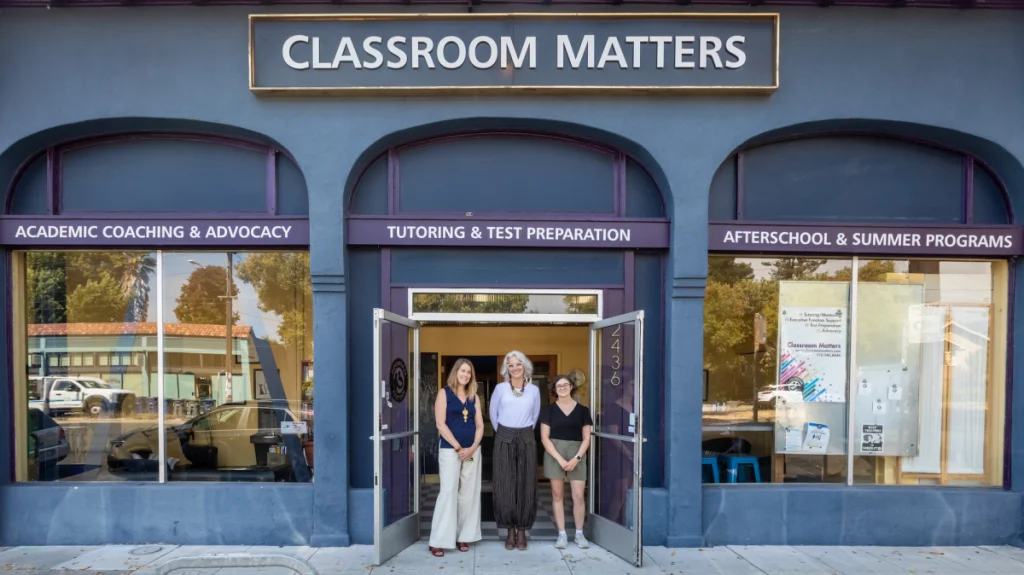
The business now has four full-timers and nearly 40 part-time tutors who receive extensive training.
When the pandemic forced the business to move its tutoring online, Classroom Matters started working with students around the nation.
“We started seeing kids outside of Berkeley and expanded our reach,” Tatiana said.
“It allowed us to work with families that couldn’t get to us,” Lisa added.
But while Classroom Matters now has students in New York and Los Angeles, Lisa and Tatiana are proud to operate a business rooted in Berkeley, where both live. Over 25 years, they estimate, their staff members have worked with about 18,000 students, many if not most from Berkeley and neighboring cities.
“We love working with families here,” Tatiana said.
Lisa, who calls Tatiana her “best friend,” added, “We’re a mom and mom business, invested in our community, and that shows.”
Curiosities AI

While Berkeley resident Yi Ng was working in the tech world, her 10-year old daughter told her she was a bit bored with school and asked if there was anything AI could offer to interest her.
Yi, who led teams building artificial intelligence tools at Intuit for 14 years, searched through the existing AI tools, and found nothing.
“They just give instant answers,” she said. “They’re not helping them learn.”
As a mother of two daughters, Reya and Lana, Yi believes in — and cherishes — the sometimes annoying tendency of younger children to constantly ask “why?” Research from the University of Michigan shows that questioning in early childhood is one of the strongest predictors of creative thinking and problem-solving in adults. Between ages 3 and 5, kids are building mental models of reality, asking 200 to 300 questions per day. But from age 6 and up, the numbers suddenly drop because children enter environments designed to provide answers, not generate questions.
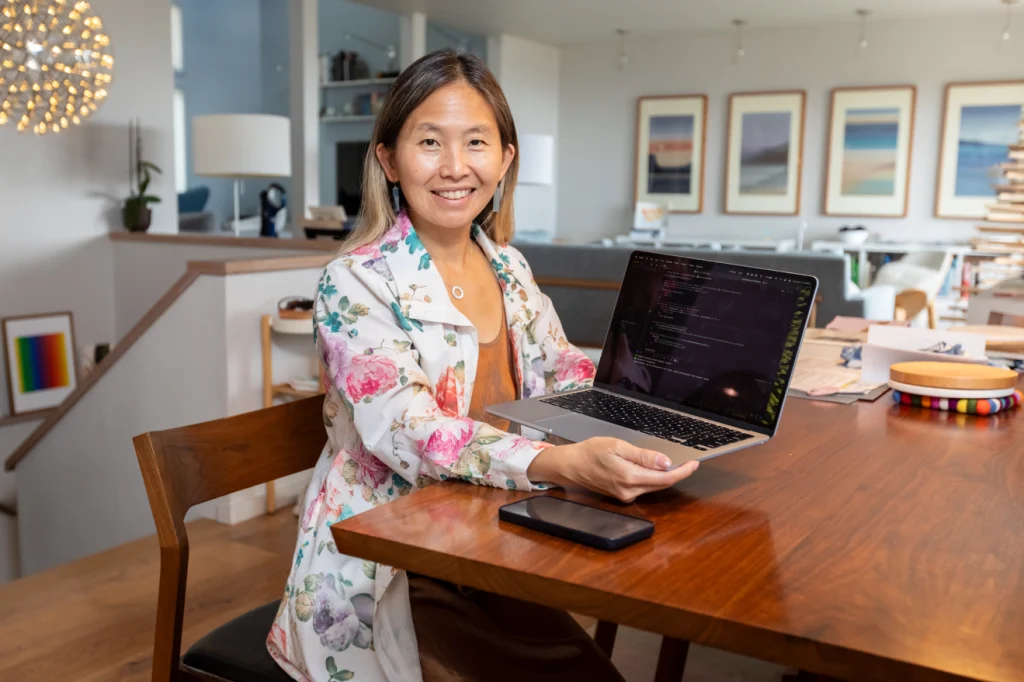
So when Yi left Intuit in 2025, she decided to create her own company, Curiosities AI, and a voice AI app called Ace that not only gives answers but asks questions and engages kids in conversation.
The app, aimed at ages 5-12, is named after its main character, an octopus called Ace. Kids can ask Ace questions, like “How many teeth does a human have?” Ace responds: “Adults usually end up with 32 teeth, including the wisdom teeth in the back. Did you know kids start with only 20?”
Ace then engaged the asker in a conversation about teeth, mentioning that sharks, unlike humans, keep getting new teeth every time they lose one. “What do you think would happen if humans grew teeth like sharks, where new ones kept replacing the old ones forever?”
The goal of Ace, which is free on the Apple app store, is not only to impart knowledge through personalized learning tailored to kids’ curiosities, but to encourage critical thinking, things that Yi thinks it’s done for both of her daughters. It also suggests books or activities that explore topics users asked about.
“There are very few AIs that encourage thinking,” she said. “That’s what Ace does.”
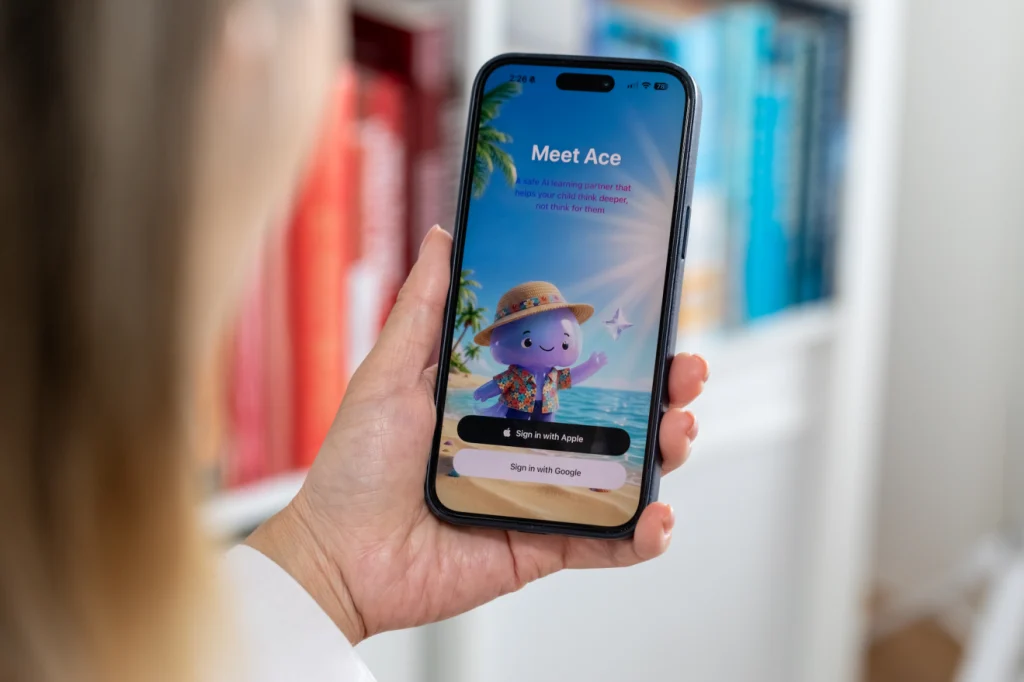
While Ace is built for kids, Yi stresses that it’s a family app with parents receiving daily, weekly and monthly reports on the topics their kids are asking about via a parent dashboard.
Curiosities AI is funded by Reach Capital, a San Francisco edtech venture capital firm. Scott Cook, Intuit’s co-founder, was an early financial backer. Cook now sits on Curiosities AI’s board of advisors, along with education experts, as a mentor to Yi and her team.
Yi is well aware that many parents may be skeptical about trusting AI, especially when it comes to educating their kids. She says it doesn’t record “streaks” — days of consecutive use — like many apps or social media sites do to get users to come back repeatedly. Part of a staff of four that keeps Ace running, Yi said Ace will rely on the quality of conversations to lure customers back.
“We want to get parents to trust that we can build an AI that’s good for kids,” she said. “And I know that trust is the bottom line.”
WHAT NEXT
- Visit the Discovered in Berkeley Stories page to find more articles about beloved local businesses.
- Contribute to the education of local youth by joining Berkeley Schools Volunteers. You’ll get placed as an extra caring adult in a Berkeley classroom, garden or library, helping people from preschoolers to adults to learn!