From the Rubik’s Cube craze to many waves of Dungeons and Dragons fandom, the Southside game shop has navigated countless fads and passions and built a legacy of table-top togetherness.
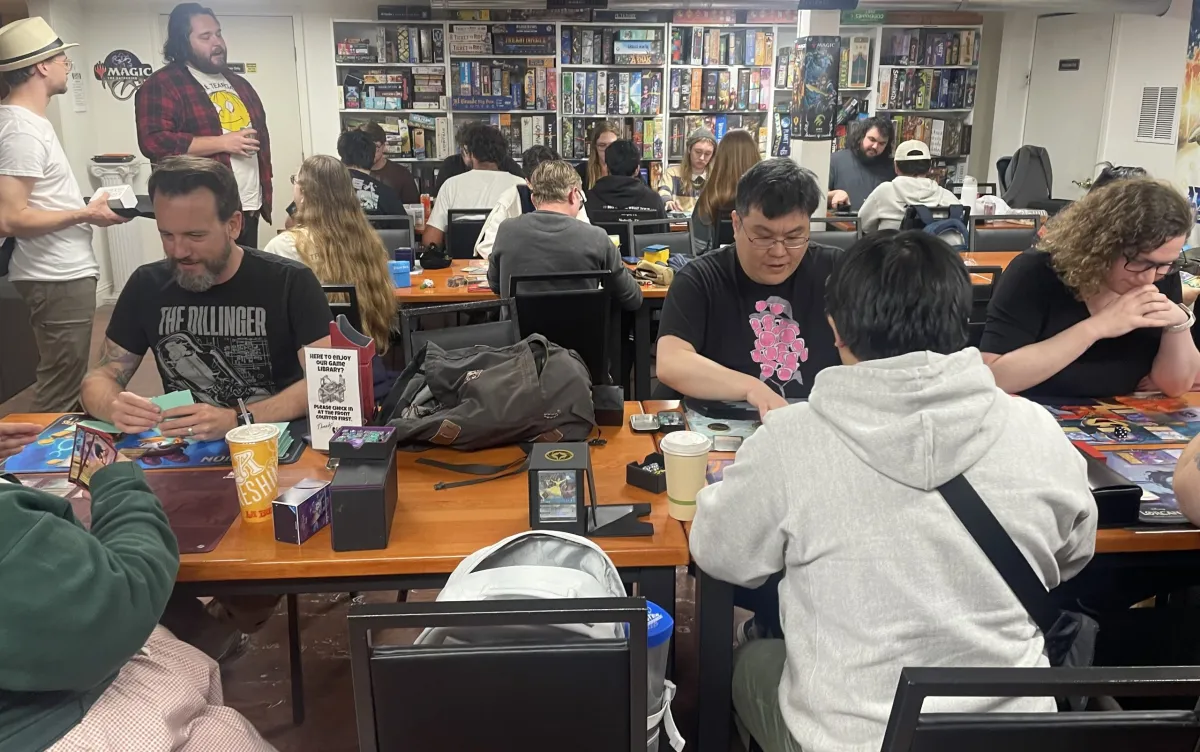
Berkeleyside — It’s Monday night and the back room at Games of Berkeley is popping.
With the clattering of dice and primal outbursts of triumph and anguish, you could almost be in Vegas, but this room holds a raucous din all its own. Rows of long tables are filled with people sitting in clusters or pairs, rolling funky-shaped dice, painting miniature creatures or clutching trading cards with looks of focused concentration usually reserved for open heart surgery.
Games of Berkeley has been welcoming people of all persuasions through its doors since 1980. Founded by board game enthusiast Don Reents, the store changed hands multiple times until 2013 when current owner Erik Bigglestone bought the business from his mother and stepfather, later bringing on managers Gwendolyn Reza and Sean Gore as co-owners.
The shop sits among the budget-friendly eateries on bustling Durant Avenue, just a block south of the UC Berkeley campus. Housed in the former Tower Records storefront, it’s an open, almost cavernous space, a welcome departure from the dusty overstuffed hidey hole traditionally associated with game shops. The shelves are a colorful pastiche of board games, plush monster and blind box toys, gaming manuals, miniatures, a dizzying selection of dice, trading cards, you name it. A potential new obsession to match every customer’s taste.
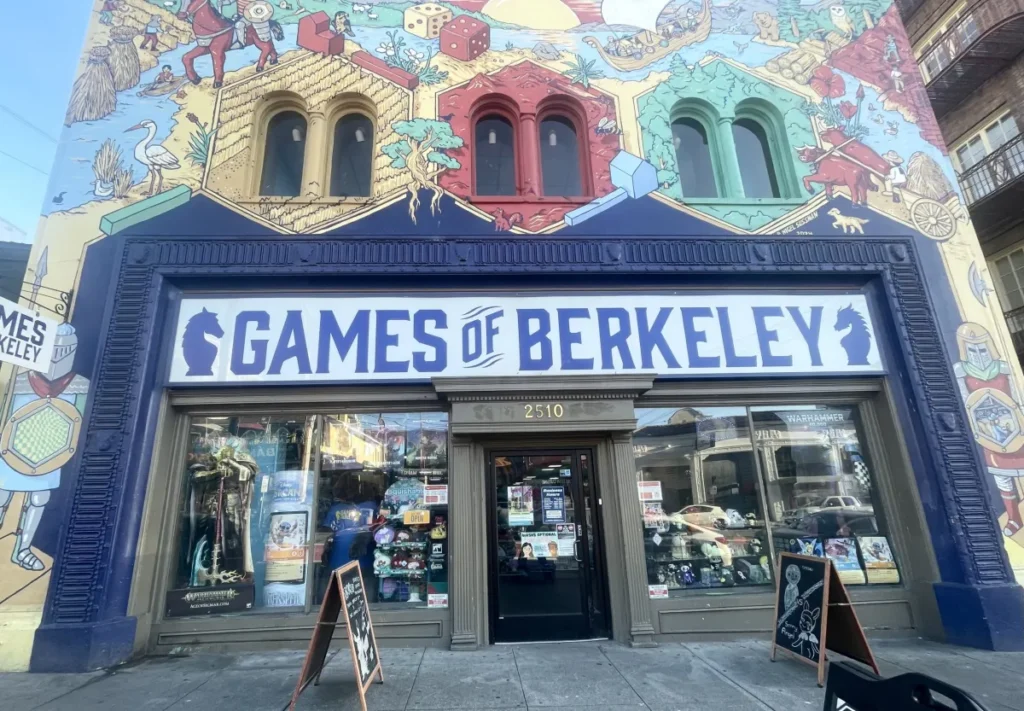
Having been around for almost 50 years, Games of Berkeley has borne witness to just about every gaming trend under the sun. In the store’s early days, the public was clamoring for Rubik’s Cube, the color-coded puzzle cube that blew minds in the ‘80s.
“People would come from all over the place to buy them,” Bigglestone recounts. “There was even a woman who would come in a chauffeured Rolls Royce from San Francisco to stock up.”
Many fads have come and gone (Google “1990s pogs”) but one game has seemingly weathered the fickle industry and continued to evolve on a parallel track with Games of Berkeley, even all these decades later.
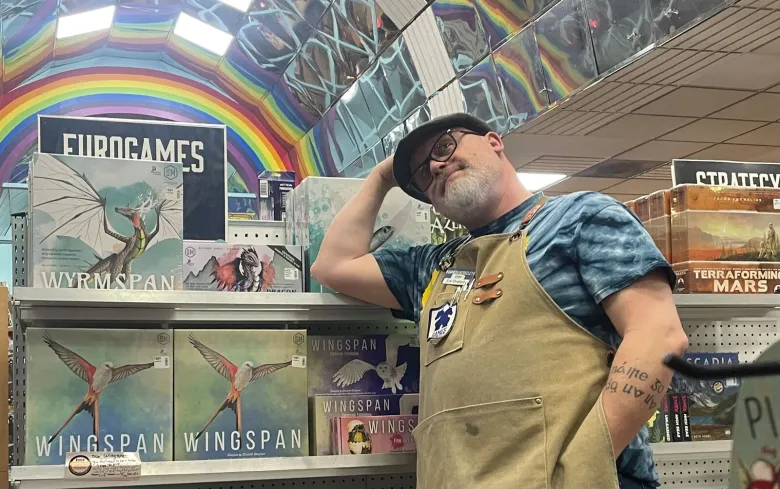
This Monday evening finds Bigglestone sitting at the head of a large square table littered with dice and snacks in a side room at the back of the store. He’s an affable middle-aged man with black-rimmed glasses, tie-dyed shirt and a heavy tan smock with a name tag bearing the title “Evil Overlord.” He’s leading a group of kids through a storytelling adventure that has largely descended into Gremlins-esque chaos as they reach the end of an hours-long session. “I’m thinking I’m going to start setting out maps because that’ll hold their attention a little better,” Bigglestone muses, after the players have gathered their backpacks and are whisked away by their guardians. “Kids that age, they’re great at imagining, but not so great at the ‘theater of the mind’ kind of thing.”
As he packs up the table, Bigglestone folds up a gaming screen emblazoned with a huge red dragon with outstretched leathery wings soaring across a mystical background, an image that will be familiar to anyone with even a passing knowledge of table-top role-playing games.
Dungeons and Dragons, commonly abbreviated as D&D or DnD, has remained perhaps the most widely known role-playing game since its original 1974 release. Created by designers Gary Gygax and Dave Arneson, its fantasy novel influences and use of individual characters distinguished it from its miniature wargame predecessors. In brief, it’s a storytelling game overseen by a Dungeon Master who guides players along on an imagined adventure. Each player assumes a different character who possesses certain abilities, such as an orc who fights well or a wizard adept at spellcasting. As the game progresses, players add to the story, rolling polyhedral dice to determine outcomes.
When Dungeons and Dragons first launched, it was largely embraced by white male outsiders. Nerds and heavy metal enthusiasts in particular seemed drawn to the game, perhaps because they were already steeped in fantasy media, whether it was in the form of books and comics (nerds) or the magical/medieval imagery favored by metal singers like Ronnie James Dio (metalheads). As almost any 1980s teen movie can attest, the era was famously unkind to social outcasts and Dungeons and Dragons was stigmatized by association. There was even a coalition called B.A.D.D. — Bothered About Dungeons and Dragons (Christian conservative parents of the era loved a sick anagram) — an offshoot of the “Satanic Panic” — warning parents that the game was a tool of the devil, luring youth into suicide, murder and ritual abuse.
In spite of these early challenges, Dungeons and Dragons has both persevered and evolved over time, as has Games of Berkeley, which feels young, inclusive, lively. Gen Zers and Millenials now make up more than three-quarters of D&D players worldwide — drawn by streaming web series, podcasts and the hit Netflix show “Stranger Things” — and 39% now identify as female.
Queer representation in Dungeons and Dragons fandom is particularly abundant in 2020s pop culture, though Games of Berkeley co-owner Sean Gore assures us that the high school drama club-to-D&D queer pipeline is nothing new.
“There’s a lot of power in the ability to express [yourself] and role-playing allows queer people to do that safely.” Gore offers. “It gives them the ability to explore things that might be outside of their financial means or they’re unable to achieve for reasons that are beyond their personal control. At a gaming table, particularly if you’re at a gaming table that’s been cultivated by a bunch of friends, they’re supportive of your fantasy.”
Beyond the heady rush of wish fulfillment, gamers might also be attracted to D&D for a more simple reason — it’s fun. It’s a chance to act out, crack jokes, be clever, eat snacks and push boundaries.
“You’re laughing, you’re getting excited. You’re thinking of new cool things.” Gore explains. “You’re riffing off quotes from the latest television show or movie you’ve seen and everyone is giggling about it. That’ll grab you no matter who you are.”
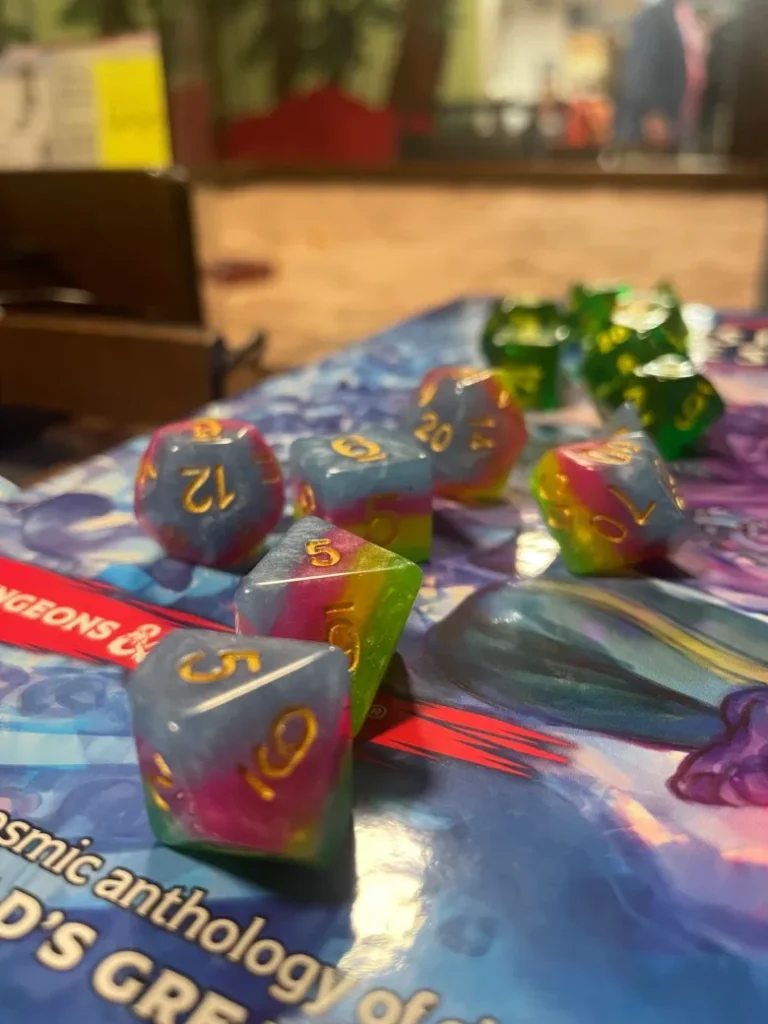
May a level 20 wizard help us all, in these turbulent times, we could all use an occasional laugh with our neighbors. Immersing yourself in an imaginary world where you might be trampled to death by a pack of orcs might not sound like the best choice for an act of community-building, but Dungeons and Dragons can be a transformative experience in more ways than one.
Any weekly game night brings a far-flung village together and when it’s a role-playing game night, people can immerse themselves in therapeutic levels of escapism. Dungeons and Dragons can be a place where you live in a world that makes sense again because you and your friends build it yourselves. After all, acting out fantasies of vanquishing a powerful enemy with a handful of friends can feel cathartic when real-life circumstances are much more daunting. The skills that might help us cultivate a harmonious society— active listening, empathy, cooperation, creativity, imagination, critical thinking —are the same skills that can help build a powerful Dungeons and Dragons adventuring party. Honestly, becoming a hobgoblin might be the most human thing you do all week.
“My stepfather used to say that all of the games that we sell are about togetherness, whether it’s a competitive or a cooperative game, it’s all about a shared experience.” Bigglestone says, before adding with a smile, “Except chess. Chess is about winning and losing.”
Games of Berkeley, 2510 Durant Ave., Berkeley. Hours: Wednesday-Sunday, 11 a.m.-9 p.m.; Sunday: 11 a.m.- 7 p.m.; Closed Tuesdays.