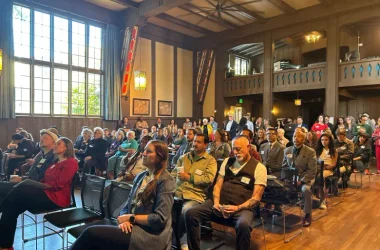
Posterchild AI and Alternative Technologies, both in Berkeley, provide tech services — each with a means of keeping costs down, so nonprofits can focus on their mission.
BERKELEYSIDE – November 19, 2026
Nonprofits today have the same technology challenges that everyone has: trying to navigate the balance between efficiency gains and the risks of cybercrime and misuse of AI.
Even harder still, most nonprofits operate with limited resources, making it a struggle to evaluate the best tech choices, communicate digitally about their social impact and secure data.
Two Berkeley-based businesses have earned the appreciation of the nonprofit community by offering tech services tailored for their needs. One is an industry stalwart, the other an upstart. Both blend entrepreneurialism with a commitment to higher purpose.
Alternative Technologies
Nonprofits are all about the mission, and perhaps no managed IT provider understands that better than Alternative Technologies.
Founded in 1989, Alternative Technologies’ longstanding mission is to provide accessible, practical technology support to organizations improving their communities.
For the past 30-odd years, the West Berkeley company has served its almost exclusively nonprofit customer base out of the historic H.J. Heinz Building, the former Heinz (as in ketchup) factory.
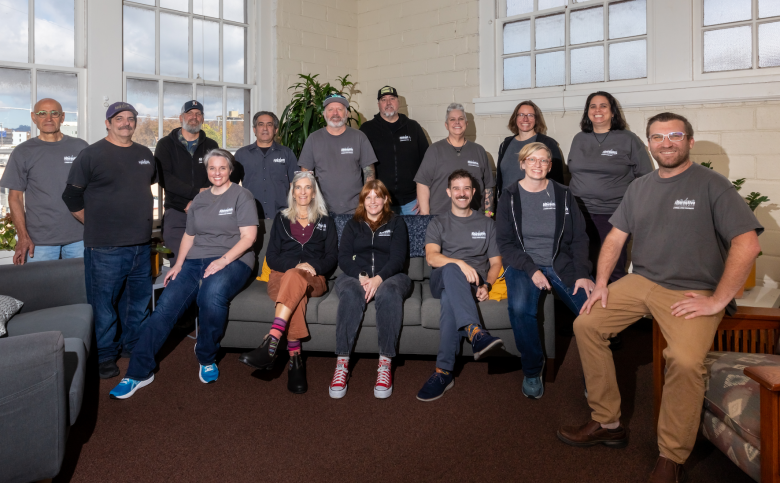
Alternative Technologies was founded by Jerry Skomer, the former head of consumer protection advocacy organization California Public Interest Research Group (CALPIRG). Like Skomer, most of the company’s 34 employees hail from nonprofits. That background gives them keen insight into their customers’ challenges.
Berkeley, with its dense nonprofit ecosystem, is fertile ground for Alternative Tech. The company serves about 100 clients in Berkeley alone, including the Sierra Club San Francisco Bay Chapter, Ecole Bilingue, Berkeley Symphony, Homeless Action Center, Legal Aid Association of California and the Kala Art Institute.
“We’ve really valued working with Alternative Technologies,” said Caleb Ontiveros, facilities manager for the East Bay Community Law Center. “Their team responds quickly to urgent issues and always digs deep and does a thorough job when it comes to process improvements and project management. We appreciate that they go beyond the immediate fix, investing in creating sustainable solutions for us.”
In addition to Alternative Tech’s lineup of traditional managed IT services, the company has identified a growing need in the nonprofit sector for robust cybersecurity services.
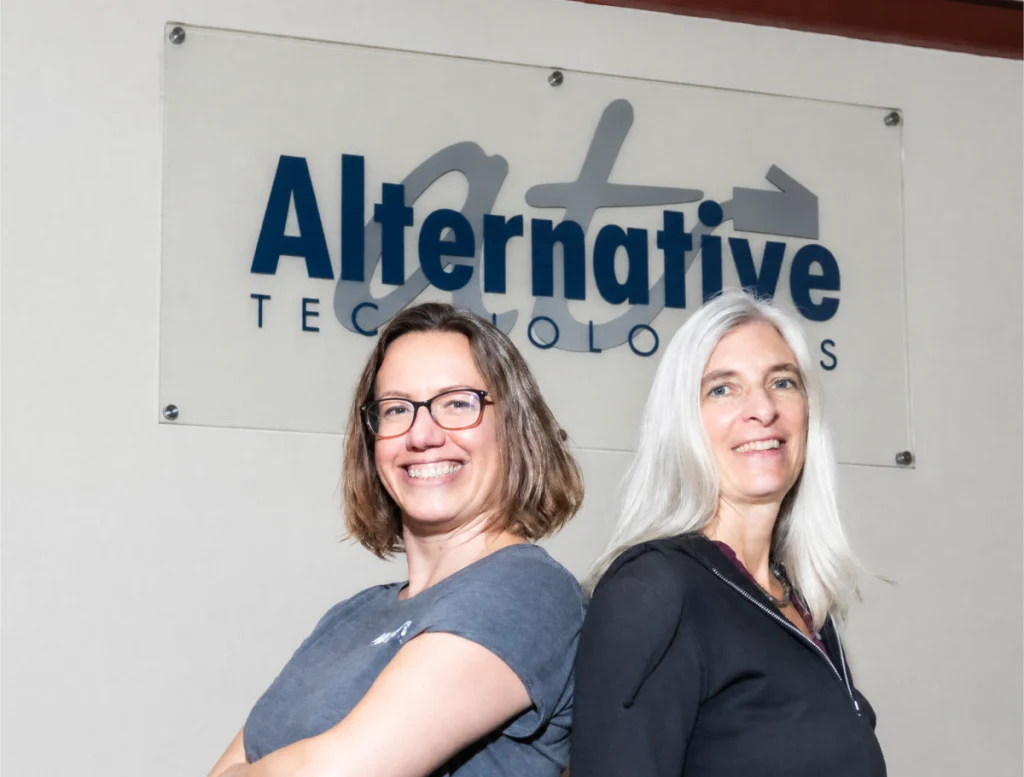
“It used to be that an IT generalist following some best practices could protect their organization,” said Katherine Cronin, co-director of Alternative Tech. “But new techniques for automating cyberattacks and pulling sophisticated scams have made it easy for bad actors to scale. Being small and under the radar doesn’t protect you anymore.”
Alternative Tech’s new managed security services offer round-the-clock monitoring of a client’s cyber attack surface, blending automated processes with human oversight and judgment.
Customers not only appreciate the services offered by Alternative Tech, but also their affordability. One way the company keeps costs down is through their worker-owner model, which eliminates the tendency toward bloated salaries for executives and management.
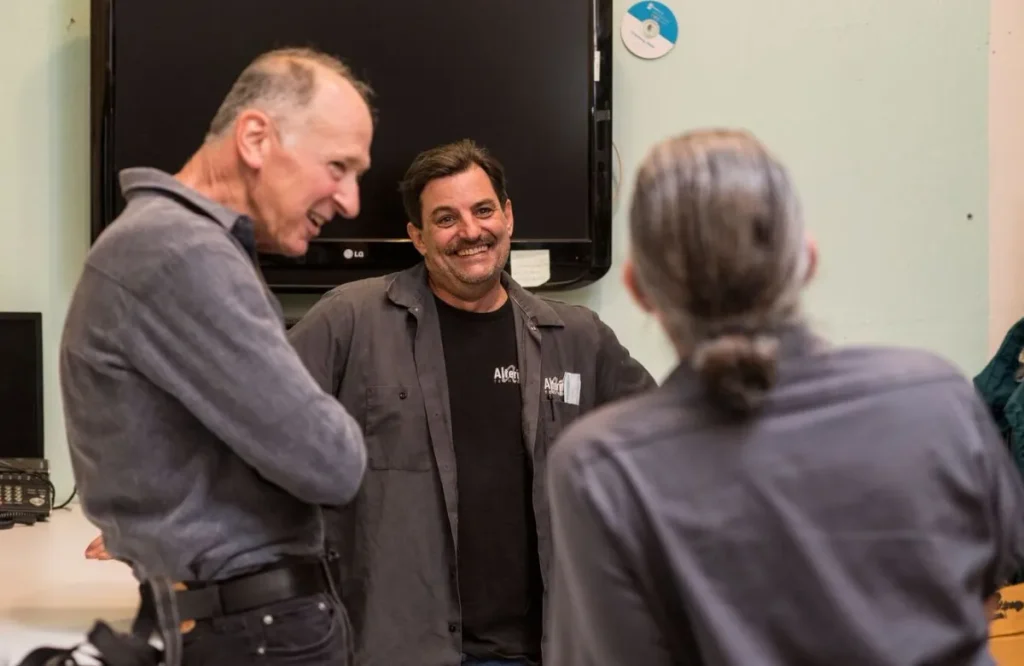
In anticipation of Skomer’s retirement, the company received a grant from the City of Berkeley Office of Economic Development to work with the nonprofit Project Equity to explore worker ownership as a succession strategy. In 2022, Alternative Tech became a worker-owned cooperative.
“When people are donating to a nonprofit, they want the money to go directly into services. And while technology is absolutely necessary to run a nonprofit organization today, it’s not as ‘shiny’ of an object for donors,” said Leslie Sanders, another co-director.
“We are proud of the clients we serve,” said Cronin. “People work here and stay here for a long time because they deeply care about the mission.”
Posterchild.ai
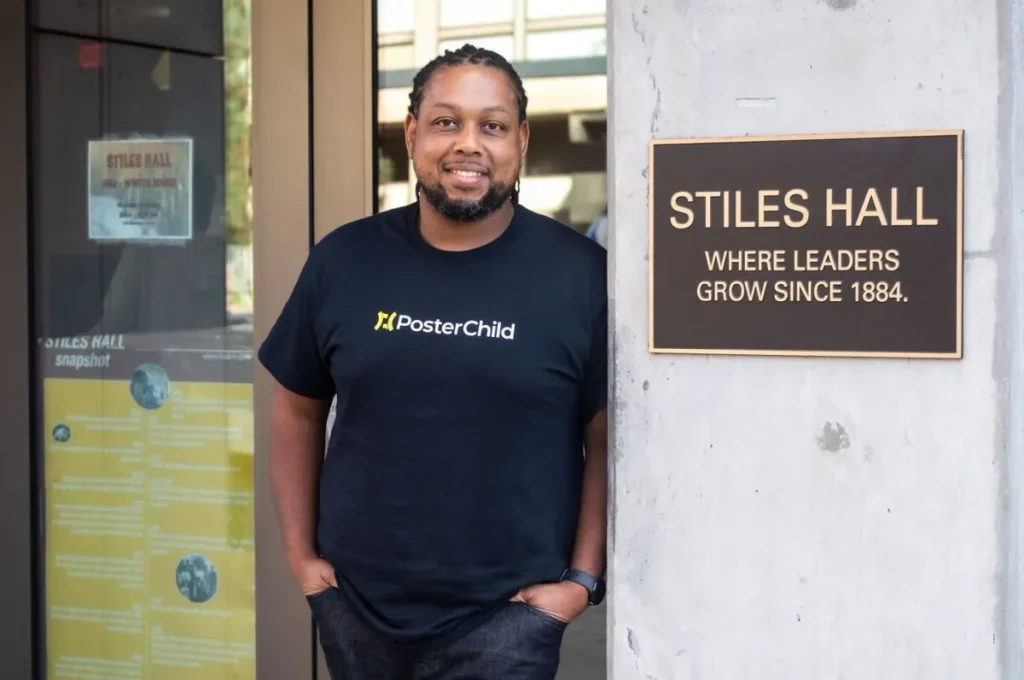
Founded in late 2024 by Berkeley native and Berkeley High grad Leandrew Robinson, Posterchild.ai is an equally mission-driven business. The company’s AI-powered fundraising platform helps turn nonprofit participants’ stories into donations.
A self-described AI skeptic, Robinson said his company’s goal is “not to replace human storytelling, but to amplify it.”
“Most nonprofits don’t have enough capacity to communicate their impact, because they’re too busy focusing on the work,” said Robinson. “AI can scale the process of collecting, shaping and distributing the authentic stories of the people and communities they serve so donors can see the value.”
Like Alternative Technologies, Robinson is deeply connected to the local nonprofit community. As an upperclassman at UC Berkeley, he was tapped to run a cohort of the Berkeley Scholars to Cal program at Stiles Hall, a private nonprofit that administers programs to enrich the lives of UC Berkeley students. The eight-year program, funded by a $750,000 gift, engaged 30 Black fifth-graders with after-school, weekend and summer enrichment programs and mentorship to help make them competitive applicants to top universities.
“I was the only Black student in my year at Berkeley High who got into UC Berkeley, so I wanted to change that for future generations,” said Robinson.
A decade-and-a-half later, Robinson co-founded Colorwave, a nonprofit that offers a fellowship program for professionals and entrepreneurs from underrepresented groups to help them succeed in the innovation economy. Along the way, Robinson started his own t-shirt brand, became second in command at a $100 million-plus online retailer, and sold the e-commerce software company Hingeto.
A recurring theme from Robinson’s time in nonprofits was the constant struggle to communicate the stories of the people and communities served. The development of generative and agentic AI gave Robinson the inspiration to create Posterchild. His approach is explicitly human-centered: the platform’s funding intelligence module not only collects user stories and turns them into digital content; it also helps nonprofits identify donors likely to support their work, and can generate tailored pitch and outreach materials.

A new feature is the “Community Intelligence” module for enterprise customers that can connect multiple Posterchild customer accounts to aggregate information and stories across interconnected organizations, such as the affiliate chapters of a national non-profit organization.
Robinson said the company has reached close to $1 million in annualized revenue and is on track to serve 100 customers by year-end, including several UC Berkeley programs and Stiles Hall.
The nonprofit leaders that Posterchild works with tend to have a healthy skepticism of AI — like Robinson — and they are disarmed when they see the power of the technology in action.
“It’s kind of like using the internet: if it can help me in a way such that it still looks like me and represents where we’re trying to go, then why not take advantage of it?” Robinson said. “There’s a lot of pressure on nonprofits to trim the administration costs, and this tool is offering customers more capacity to do what they already want to do. People are really leaning into it.”
WHAT NEXT
- Peruse the Berkeley Chamber’s nonprofit directory in advance of Giving Tuesday (Dec. 1) to find local nonprofits that would appreciate your support this holiday season.
- Support legacy businesses, like Alternative Technologies, that have operated in Berkeley for more than 25 years.
- Visit the Discovered in Berkeley.com Stories page to find more inspiration from impact-driven local businesses.